Quick answer
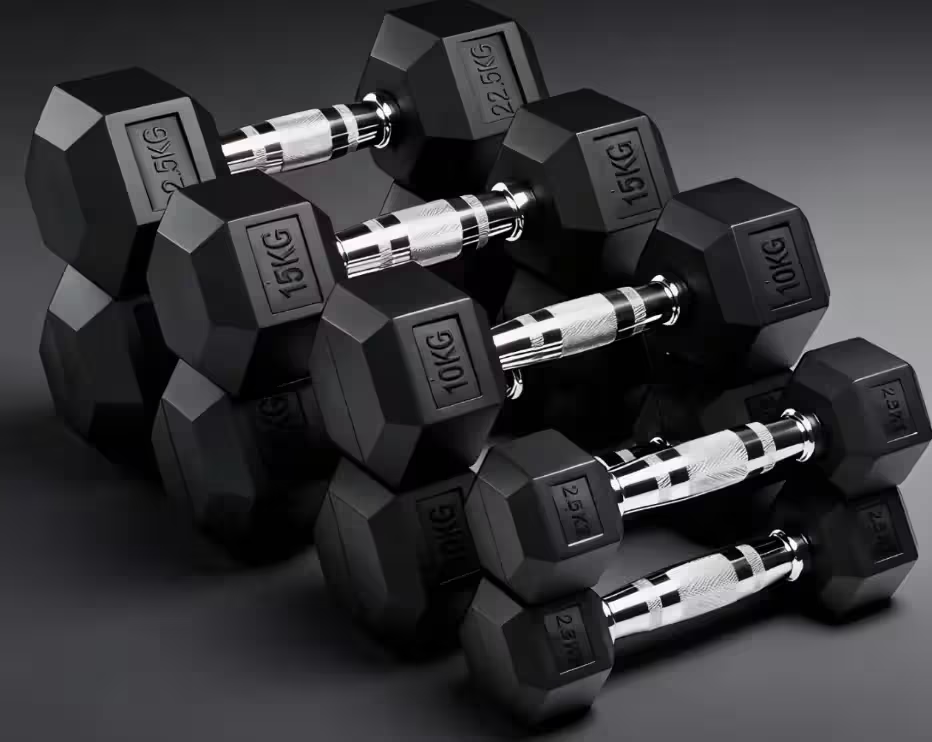
Hex dumbbells reduce rolling and can be practical for floor-based movements, circuits and smaller training spaces. Round dumbbells support a continuous traditional presentation and can be offered in broad or heavy ranges when paired with suitable storage. Neither shape is automatically more commercial. Compare construction, head dimensions, handle, range, popular-weight duplication, floor use, storage footprint, cleaning and replenishment.
Definition
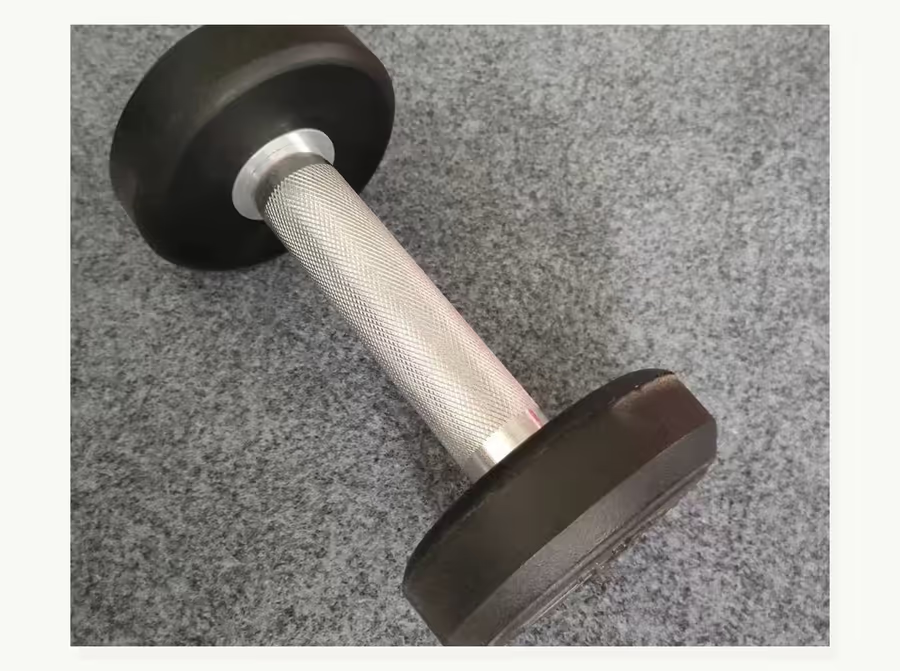
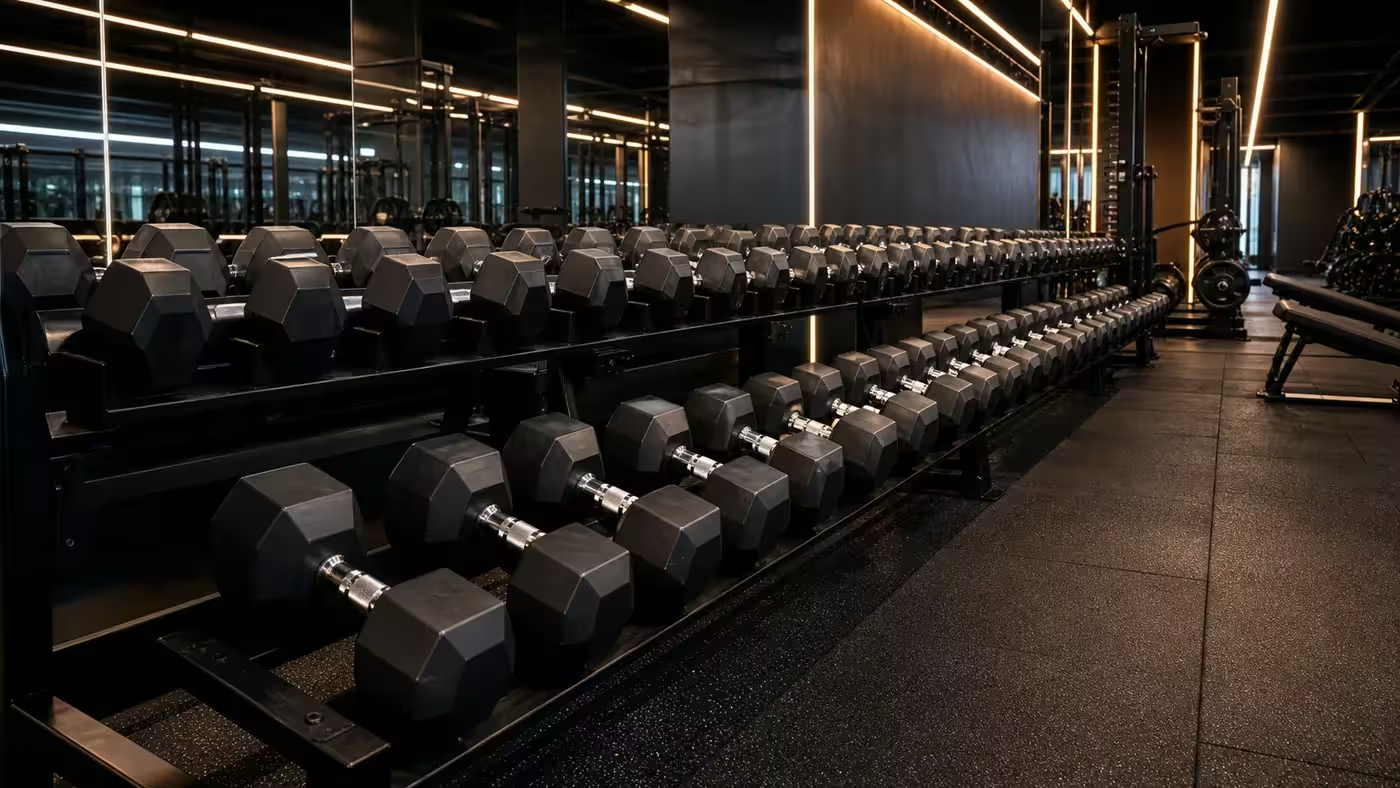
Dumbbell head shape is the outside geometry of the weighted ends. Hexagonal heads provide flat faces, while round heads use a circular profile. Shape affects movement on the floor, storage contact, visual organization and some exercises; it does not by itself determine material quality, connection strength or weight accuracy.
Application and buyer context
A useful review of floor stability during circuits and supported exercises begins with the actual operating conditions for hex and round dumbbell selection. Record who will use the product, how frequently it will be handled, where it will be stored and which result matters to the buyer. Ask for product-specific evidence rather than relying on a category name. Dimensions, materials, finish, markings, packaging and inspection criteria should refer to the same model and revision. If one detail remains open, show it as an assumption in the comparison instead of allowing each supplier to interpret it differently. This makes price, sample and delivery discussions easier to compare and gives the receiving team a clear reference.
Treat rolling control when users set weights down as an operating decision, not a promotional claim about hex and round dumbbell selection. Compare the same weight, configuration and intended use, then note what can be checked on a sample and what must be controlled during production. The responsible buyer should identify the evidence required, the person who approves it and the point at which approval is needed. A photograph can confirm appearance, but measurable features need a stated method and result. Keeping these items together prevents late changes from being hidden inside an updated quotation or informal message.
For hex and round dumbbell selection, head dimensions at light, medium and heavy weights should be connected to users, space, cleaning routines, replenishment and the expected product position. Separate essential requirements from preferences and from details that are still unknown. Essential items become acceptance criteria; preferences can be evaluated against cost; unknowns receive an owner and deadline. This approach avoids choosing a product because one visible feature looks attractive while construction, compatibility, handling or packaging remains unclear. It also creates a practical record for a repeat order or a later addition to the same range.
Comparison table
| Option or factor | Best fit | Verify before ordering |
|---|---|---|
| Hex head | Floor work, circuits and reduced rolling | Face geometry, material, handle and range |
| Round head | Traditional strength areas and continuous sets | Storage, head diameter, range and identification |
| Mixed facility | Separate zones or clearly organized lines | Visual system and compatible storage |
| Shape alone | Initial use-case filter | Construction, weight, finish and batch control |
How to make the selection
Evaluate available weight range and progression steps across the full route from sample to daily use of hex and round dumbbell selection. Confirm the proposed specification, approve a representative sample where appropriate, define production checks, protect the relevant surfaces in packing and inspect the delivered batch against the approved record. The depth of control should match the commercial risk, quantity and degree of customization. No single checklist replaces product knowledge, but a consistent sequence exposes differences early and makes corrective action easier to agree before goods are shipped.
A useful review of duplicate pairs at the facility's busiest loads begins with the actual operating conditions for hex and round dumbbell selection. Record who will use the product, how frequently it will be handled, where it will be stored and which result matters to the buyer. Ask for product-specific evidence rather than relying on a category name. Dimensions, materials, finish, markings, packaging and inspection criteria should refer to the same model and revision. If one detail remains open, show it as an assumption in the comparison instead of allowing each supplier to interpret it differently. This makes price, sample and delivery discussions easier to compare and gives the receiving team a clear reference.
Treat handle diameter, knurling and usable grip length as an operating decision, not a promotional claim about hex and round dumbbell selection. Compare the same weight, configuration and intended use, then note what can be checked on a sample and what must be controlled during production. The responsible buyer should identify the evidence required, the person who approves it and the point at which approval is needed. A photograph can confirm appearance, but measurable features need a stated method and result. Keeping these items together prevents late changes from being hidden inside an updated quotation or informal message.
Commercial use and maintenance
For hex and round dumbbell selection, storage footprint and clear weight identification should be connected to users, space, cleaning routines, replenishment and the expected product position. Separate essential requirements from preferences and from details that are still unknown. Essential items become acceptance criteria; preferences can be evaluated against cost; unknowns receive an owner and deadline. This approach avoids choosing a product because one visible feature looks attractive while construction, compatibility, handling or packaging remains unclear. It also creates a practical record for a repeat order or a later addition to the same range.
Evaluate cleaning around faces, seams and contact points across the full route from sample to daily use of hex and round dumbbell selection. Confirm the proposed specification, approve a representative sample where appropriate, define production checks, protect the relevant surfaces in packing and inspect the delivered batch against the approved record. The depth of control should match the commercial risk, quantity and degree of customization. No single checklist replaces product knowledge, but a consistent sequence exposes differences early and makes corrective action easier to agree before goods are shipped.
A useful review of member behavior in gyms, studios and hotel facilities begins with the actual operating conditions for hex and round dumbbell selection. Record who will use the product, how frequently it will be handled, where it will be stored and which result matters to the buyer. Ask for product-specific evidence rather than relying on a category name. Dimensions, materials, finish, markings, packaging and inspection criteria should refer to the same model and revision. If one detail remains open, show it as an assumption in the comparison instead of allowing each supplier to interpret it differently. This makes price, sample and delivery discussions easier to compare and gives the receiving team a clear reference.
Quality control and purchasing evidence
Treat sample review across light and heavy variants as an operating decision, not a promotional claim about hex and round dumbbell selection. Compare the same weight, configuration and intended use, then note what can be checked on a sample and what must be controlled during production. The responsible buyer should identify the evidence required, the person who approves it and the point at which approval is needed. A photograph can confirm appearance, but measurable features need a stated method and result. Keeping these items together prevents late changes from being hidden inside an updated quotation or informal message.
For hex and round dumbbell selection, weight, connection and surface inspection should be connected to users, space, cleaning routines, replenishment and the expected product position. Separate essential requirements from preferences and from details that are still unknown. Essential items become acceptance criteria; preferences can be evaluated against cost; unknowns receive an owner and deadline. This approach avoids choosing a product because one visible feature looks attractive while construction, compatibility, handling or packaging remains unclear. It also creates a practical record for a repeat order or a later addition to the same range.
Evaluate replenishment without mixing incompatible dimensions across the full route from sample to daily use of hex and round dumbbell selection. Confirm the proposed specification, approve a representative sample where appropriate, define production checks, protect the relevant surfaces in packing and inspect the delivered batch against the approved record. The depth of control should match the commercial risk, quantity and degree of customization. No single checklist replaces product knowledge, but a consistent sequence exposes differences early and makes corrective action easier to agree before goods are shipped.
Turn the decision into a purchase record
Treat floor stability during circuits and supported exercises as an operating decision, not a promotional claim about hex and round dumbbell selection. Compare the same weight, configuration and intended use, then note what can be checked on a sample and what must be controlled during production. The responsible buyer should identify the evidence required, the person who approves it and the point at which approval is needed. A photograph can confirm appearance, but measurable features need a stated method and result. Keeping these items together prevents late changes from being hidden inside an updated quotation or informal message.
For hex and round dumbbell selection, handle diameter, knurling and usable grip length should be connected to users, space, cleaning routines, replenishment and the expected product position. Separate essential requirements from preferences and from details that are still unknown. Essential items become acceptance criteria; preferences can be evaluated against cost; unknowns receive an owner and deadline. This approach avoids choosing a product because one visible feature looks attractive while construction, compatibility, handling or packaging remains unclear. It also creates a practical record for a repeat order or a later addition to the same range.
Evaluate weight, connection and surface inspection across the full route from sample to daily use of hex and round dumbbell selection. Confirm the proposed specification, approve a representative sample where appropriate, define production checks, protect the relevant surfaces in packing and inspect the delivered batch against the approved record. The depth of control should match the commercial risk, quantity and degree of customization. No single checklist replaces product knowledge, but a consistent sequence exposes differences early and makes corrective action easier to agree before goods are shipped.
A useful review of replenishment without mixing incompatible dimensions begins with the actual operating conditions for hex and round dumbbell selection. Record who will use the product, how frequently it will be handled, where it will be stored and which result matters to the buyer. Ask for product-specific evidence rather than relying on a category name. Dimensions, materials, finish, markings, packaging and inspection criteria should refer to the same model and revision. If one detail remains open, show it as an assumption in the comparison instead of allowing each supplier to interpret it differently. This makes price, sample and delivery discussions easier to compare and gives the receiving team a clear reference.
Turn the decision into a purchase record
Checklist stage 1 for hex and round dumbbell selection: Target users; Exercise mix; Floor behavior; Weight range. Put each item in the inquiry or approval record with a value, reference or named open question. Confirm which party supplies the information and when it must be approved. If a proposed change affects another item, issue a new version rather than overwriting the previous decision. At final review, unresolved points must be accepted deliberately, corrected or removed from the order scope.
Checklist stage 2 for hex and round dumbbell selection: Increment plan; Duplicate popular pairs; Head dimensions; Handle specification. Put each item in the inquiry or approval record with a value, reference or named open question. Confirm which party supplies the information and when it must be approved. If a proposed change affects another item, issue a new version rather than overwriting the previous decision. At final review, unresolved points must be accepted deliberately, corrected or removed from the order scope.
Checklist stage 3 for hex and round dumbbell selection: Storage footprint; Cleaning routine; Sample weights; Reorder plan. Put each item in the inquiry or approval record with a value, reference or named open question. Confirm which party supplies the information and when it must be approved. If a proposed change affects another item, issue a new version rather than overwriting the previous decision. At final review, unresolved points must be accepted deliberately, corrected or removed from the order scope.
Buyer checklist
- Target users
- Exercise mix
- Floor behavior
- Weight range
- Increment plan
- Duplicate popular pairs
- Head dimensions
- Handle specification
- Storage footprint
- Cleaning routine
- Sample weights
- Reorder plan
Related buyer resources
- Commercial dumbbells
- Manufacturing and quality
- Project references
- Discuss a requirement
- Compare dumbbell materials
- Plan the free weight area
Frequently Asked Questions
Are hex dumbbells safer than round dumbbells?
Flat faces reduce rolling, but safe use still depends on flooring, user behavior, spacing and maintenance.
Which shape is better for floor exercises?
Hex heads are often more stable when a dumbbell supports the body, subject to the specific model and exercise.
Do round dumbbells need dedicated storage?
They need a stable system that prevents rolling and keeps weights identifiable.
Which shape supports heavier sets?
That depends on the product line. Confirm the offered range and actual dimensions rather than assuming from shape.
Can a gym use both shapes?
Yes, particularly in distinct zones or programs with clear organization.
Does shape determine durability?
No. Material, core, handle connection, manufacturing control and use have greater influence.
What should a buyer measure?
Check overall length, head dimensions, grip, actual weight, storage footprint and spacing for the planned run.
Conclusion
Hex dumbbells reduce rolling and can be practical for floor-based movements, circuits and smaller training spaces. Round dumbbells support a continuous traditional presentation and can be offered in broad or heavy ranges when paired with suitable storage. Neither shape is automatically more commercial. Compare construction, head dimensions, handle, range, popular-weight duplication, floor use, storage footprint, cleaning and replenishment.