Introduction
Training and competition bumper plates can share the same basic purpose—loading an Olympic bar with plates designed for controlled contact with an appropriate lifting surface—but they serve different purchasing priorities. A competition-style plate may offer tighter controlled characteristics and a large precision hub, while a training plate may deliver a practical balance for daily facility use. Product names alone do not prove performance.
Commercial buyers should compare the actual model, not assume that every “competition” plate meets a federation specification or that every “training” plate is a low-cost alternative. The right choice depends on lifting program, user behavior, bar loading, platform and floor, noise expectations, maintenance, budget, branding, and replacement strategy.
Quick Answer
Choose competition-style bumper plates when the facility or sales channel needs a premium standardized appearance, controlled dimensions and weight, a large center hub, low profile, and documentation that matches the promised specification. Choose training bumper plates when daily commercial training, value, broad member use, and a simpler product architecture are the priorities.
Before buying, request model-specific diameter, thickness by weight, center-hole and hub construction, nominal-weight tolerance, hardness or rebound information when controlled, drop-test method, surface finish, markings, warranty scope, packaging, and QC records. Confirm that the floor, platform, bar, and facility rules suit repeated drops.
Definition: What Makes a Bumper Plate a Bumper Plate?
A bumper plate is a weight plate with a resilient body, commonly rubber-based, designed so the main weight sizes share a consistent outside diameter and can be used in lifting where the loaded bar may contact an appropriate platform. Construction can include virgin or recycled rubber, color compounds, urethane in some categories, and a steel insert or hub.
The label does not mean the plate can be dropped anywhere, from any height, with any load. Platform design, subfloor, bar, minimum load, technique, temperature, maintenance, and use frequency affect the system. Buyers should obtain product instructions and establish facility rules.
Typical Training-Plate Priorities
Training bumpers are commonly selected for commercial gyms, functional training areas, schools, studios, and general lifting. Buyers often prioritize usable durability, readable weight markings, acceptable rebound, practical thickness, replacement availability, and cost across a complete range.
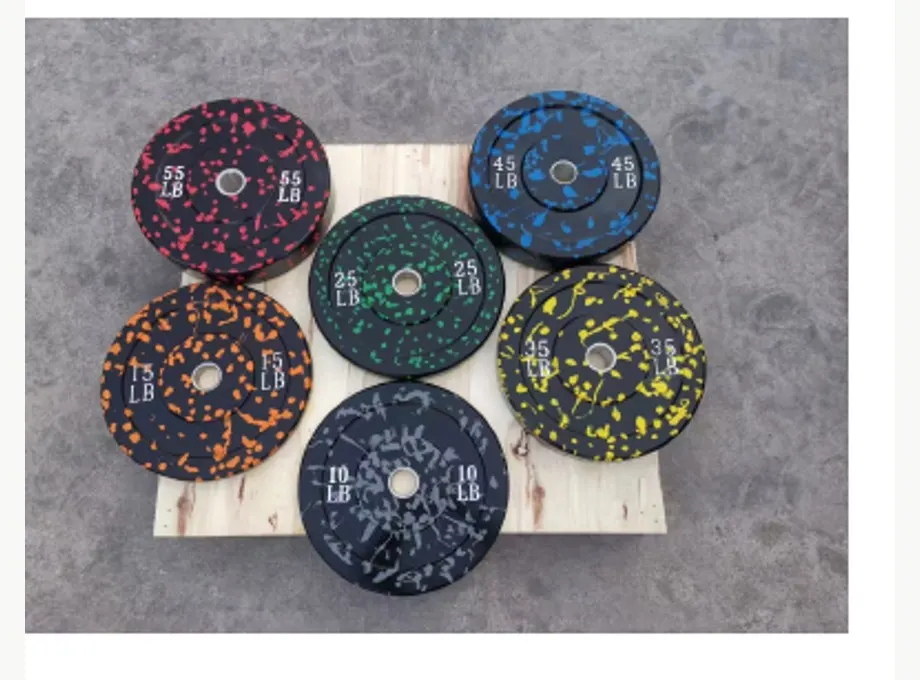
Construction varies widely. Some training plates use simple steel inserts; others use more substantial center assemblies. Some are black with colored markings; others use full color or fleck designs. A lower price does not identify the rubber formulation, bond, insert fit, or drop performance.
Ask what the model is designed for, how it is tested, and what conditions apply. Compare the actual rubber bumper plate rather than relying on the category name.
Typical Competition-Style Priorities
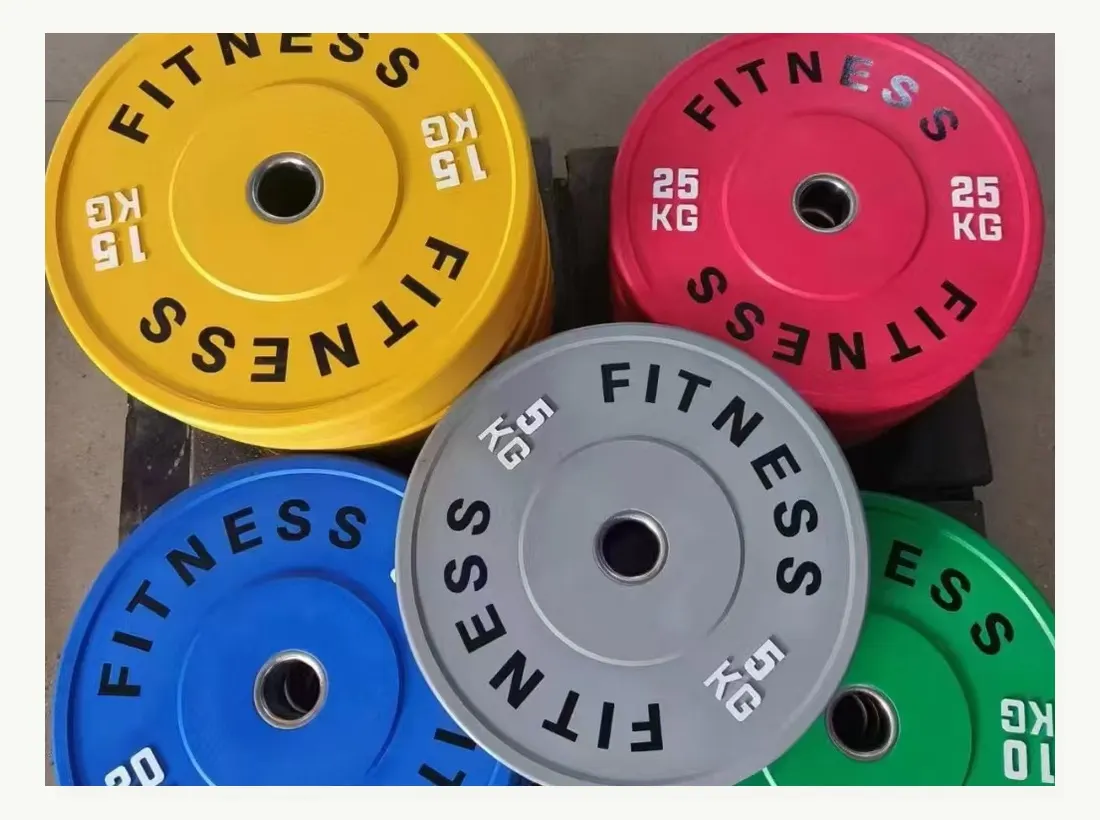
Competition-style plates generally target buyers who value precise presentation, controlled dimensions, consistent colors, large metal hubs, thinner profiles, and closer weight control. They may be used in weightlifting clubs, premium strength facilities, events, athlete training centers, or higher-positioned retail programs.
“Competition-style” and “certified for a specific federation event” are not identical. Certification or conformity claims require current supporting evidence for the exact model. A buyer should not infer approval from color or hub appearance.
The larger hub increases machining and assembly requirements and affects price. Thin profiles can allow more weight on the bar, but the complete plate schedule and bar sleeve must be checked.
Compare Construction and Hub Design
Training plates may use a compact insert bonded or locked into the resilient body. Competition-style plates often use a larger multi-part steel hub. The hub must fit the bar sleeve appropriately and remain secure through intended use.
Ask for center-hole dimensions and tolerances, hub material and finish, attachment method, and inspection. Review sharp edges, corrosion protection, fasteners where used, and movement between hub and body. A visually impressive hub is not sufficient if fit or assembly is inconsistent.
For private label, determine where the logo and weight marks sit relative to the hub. Additional components can create more branding space but also more inspection points.
Thickness, Bar Capacity, and Weight Range
Plate thickness affects how much total weight fits on the bar. Light bumper plates are often thicker relative to their nominal weight because the body must maintain diameter and structural continuity. Competition-style construction may achieve a thinner profile, depending on model and material.
Request a thickness table for every weight. Do not use one example to estimate the full range. Confirm bar sleeve length and collars for the intended setup. A gym serving general users may value easy handling more than maximum bar capacity, while a strength or weightlifting facility may place greater importance on profile.
Also review the lightest plate. Thin low-weight bumpers can be more vulnerable when dropped alone. Facility rules may require minimum total loading or pairing with heavier plates; confirm manufacturer guidance.
Weight Accuracy and Dimensional Control
Both categories should meet the specification agreed between buyer and supplier. Competition-style buyers often request tighter weight control and more detailed measurement records, but the exact tolerance is model- and contract-dependent. “Accurate” is not a measurable purchasing requirement without a number and method.
Ask how scales are verified, how samples are selected, whether individual or sampled results are recorded, and how out-of-limit plates are handled. Confirm outside diameter, center hole, thickness, and hub fit. If a standard is claimed, request the current standard reference and evidence relevant to the exact product.
For a distributor, weight accuracy must align with label and marketing claims. Do not publish a tolerance tighter than the factory specification and inspection plan.
Rebound, Hardness, Noise, and Floor Interaction
Rebound is influenced by material, hardness, construction, temperature, platform, load, and test method. A plate described as “low bounce” should have a defined comparison or test basis. Training and competition-style models can both be designed for controlled rebound, but buyers need product-specific data.
Harder compounds may change rebound, sound, grip, and surface behavior. Softer compounds may feel different and can affect thickness or durability. No plate makes dropping silent or protects an unsuitable floor. The lifting surface is part of the system.
Evaluate the plates on the intended bar and platform under controlled conditions. For multi-user gyms, combine product selection with rules, signage, maintenance, and supervision.
Comparison Table
| Buying factor | Training bumper plate | Competition-style bumper plate |
|---|---|---|
| Primary role | Daily training and broad commercial use | Controlled premium or competition-oriented use |
| Center | Often compact insert; model-dependent | Often larger machined hub |
| Profile | Practical; thickness varies by weight | Often thinner for bar capacity |
| Weight control | Agreed commercial tolerance | Often specified more tightly |
| Appearance | Black, color, or fleck options | Standardized color and premium hub appearance |
| Documentation | Product sheet and QC plan | Detailed dimension and weight evidence often expected |
| Cost drivers | Rubber, insert, molding, volume | Hub machining, tighter control, finish, assembly |
| Best fit | General gyms, studios, training ranges | Weightlifting clubs, premium facilities, specialist retail |
This table shows common positioning, not guaranteed specifications. Compare the exact offered models.
Durability and Drop-Test Questions
Ask for the drop-test method, load configuration, platform, height, number of cycles, conditioning, inspection intervals, and failure definition. A large cycle number without method is not comparable. Laboratory or factory tests also do not reproduce every misuse condition.
Review insert or hub movement, cracking, delamination, edge damage, deformation, marking wear, and outside-diameter change. Inspect plates periodically in the gym and remove damaged products according to facility policy.
The lightest plates and plates dropped alone deserve attention. Use appropriate minimum loading and bar practices. Warranty terms may exclude misuse, unsuitable surfaces, outdoor storage, or other conditions; read the model-specific document.
OEM, Color, and Marking Decisions
Private-label options can include molded logo, printed details, color, fleck pattern, weight units, hub marking, and packaging. Each affects mold, MOQ, sample, color control, and inspection. Competition-style colors may follow familiar conventions, while a brand color system can serve commercial differentiation.
Balance identity with usability. Weight numbers should remain visible at a distance. If selling in kg and lb markets, decide whether to use dual markings or separate SKUs. Check every artwork file and carton to prevent weight mix-ups.
Keep approved color samples and artwork for repeat orders. Materials may have controlled variation, so define an acceptable range rather than relying on screen images.
Buyer Checklist
- Define facility, lifting program, users, platform, and drop policy.
- Decide whether premium precision or general training value is primary.
- Request material, construction, hub, and attachment details.
- Obtain diameter and thickness for every nominal weight.
- Confirm center-hole fit and intended bar compatibility.
- Agree weight tolerance, measurement method, and QC records.
- Ask for rebound or hardness data only with a defined basis.
- Review drop-test method rather than headline cycle numbers.
- Compare light-plate guidance and minimum loading rules.
- Confirm logo, colors, units, molds, MOQ, and samples.
- Review cartons, pallet, gross weight, and replacement availability.
- Train staff to inspect damage and enforce platform rules.
Factory Perspective
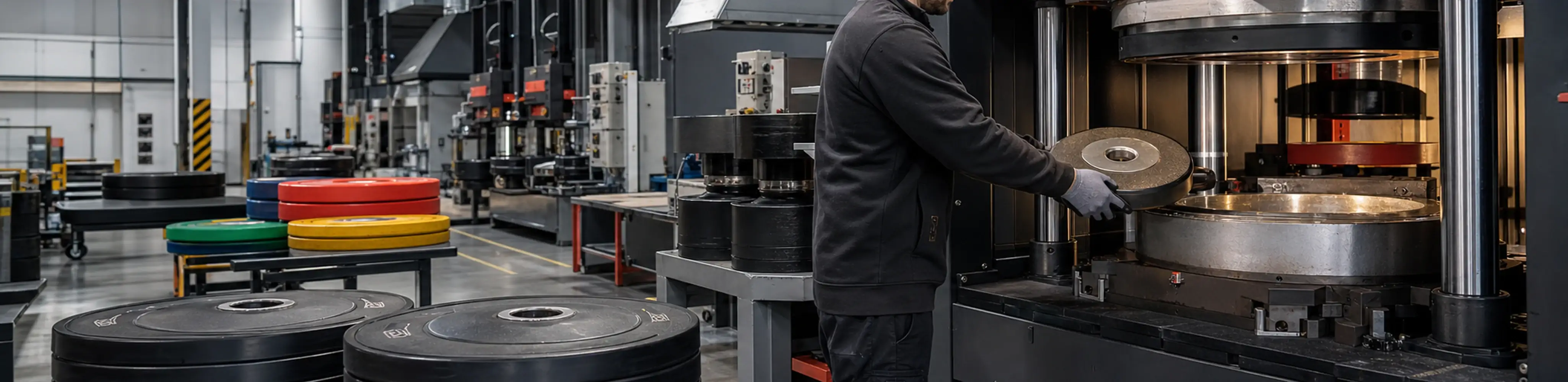
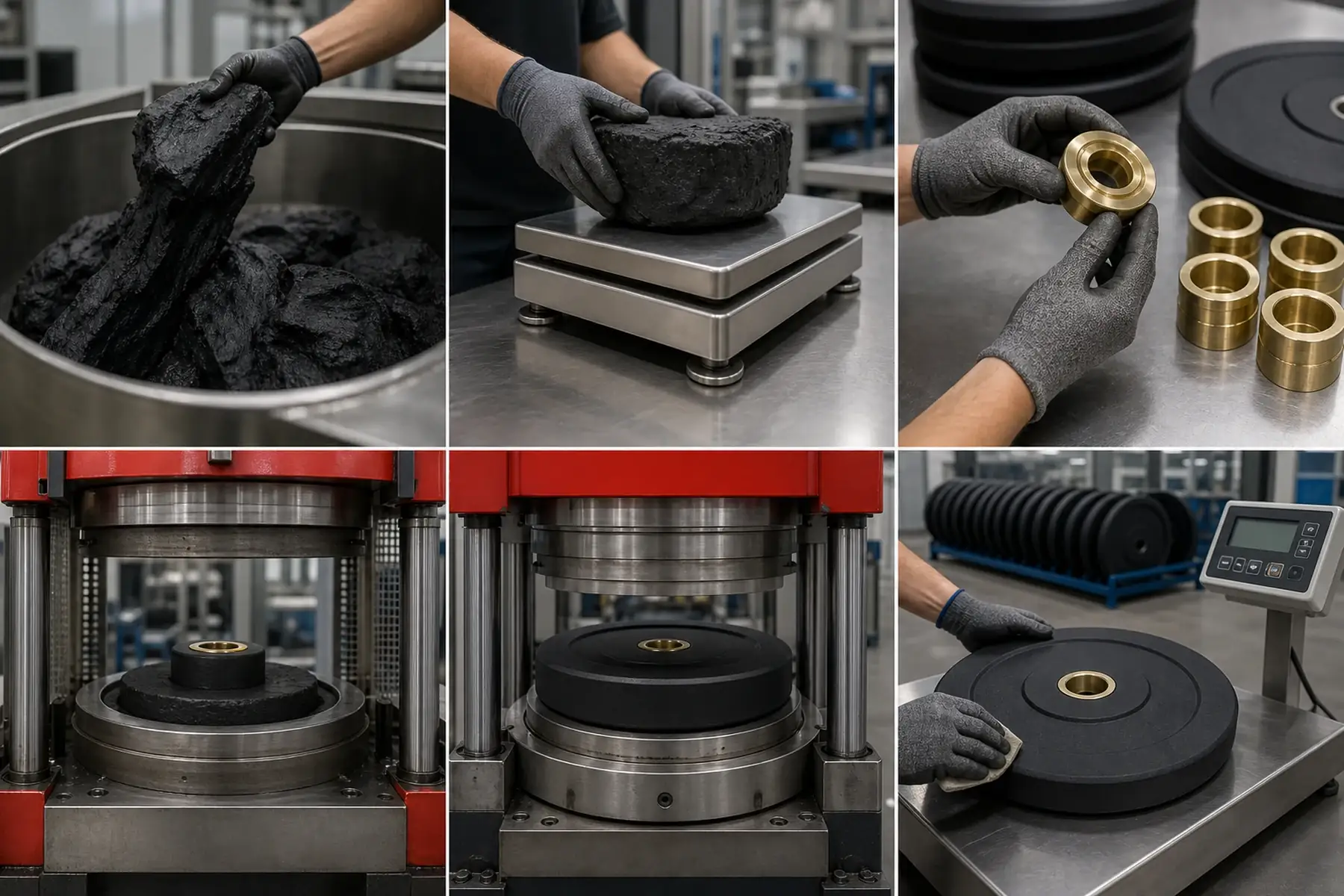
Bumper production may involve material preparation, molding, hub or insert assembly, finishing, weight verification, marking, visual inspection, and packing. Process settings and material control influence repeatability. A competition-style hub adds component and assembly checks.
PowerBaseFit offers different plate constructions and confirms model-specific materials, dimensions, tolerances, testing, branding, MOQ, and packing during quotation. Buyers should state the intended environment and required evidence so the proposed model matches the commercial claim.
The approved sample and technical sheet become the reference for production and final inspection. Replacements and repeat orders should reference the same model and revision.
Conclusion
Training versus competition bumper plates is not a simple good-better-best ladder. Training plates can be the rational choice for high-volume daily use, while competition-style plates can justify their added precision, hub, profile, and presentation in specialist or premium settings. The correct answer follows the facility and buyer proposition.
Prepare the weight range, quantities, use, bar and platform context, branding, destination, and required QC evidence. Ask PowerBaseFit for a model-specific bumper plate comparison before relying on a category label.
Frequently Asked Questions
Are competition bumper plates always more durable?
Not automatically. Durability depends on material, construction, hub assembly, use, platform, loading, and test method. Competition-style plates may offer tighter control but should be evaluated by model.
Do commercial gyms need competition plates?
Many do not. A general gym may gain more value from a well-specified training plate and adequate quantity. Weightlifting-focused or premium facilities may value thinner profile, precision, and presentation.
What does low bounce mean?
It should refer to behavior under a defined test and surface. Rebound varies with material, hardness, load, temperature, bar, and platform. Ask for the model's test basis.
Can bumper plates be dropped on any gym floor?
No. They require an appropriate platform or floor system and suitable facility rules. Confirm local structural and safety requirements and manufacturer guidance.
Should a distributor stock both types?
Only when the market supports distinct propositions. A clear training range may serve broad demand, while a competition-style line targets specialist buyers. Consider inventory, education, and replacement capability.