Introduction
A pre-shipment inspection, or PSI, is the last planned opportunity to compare a finished free weight order with the approved specification before release. It does not create quality at the end of production. It verifies whether the product, branding, quantity, and packing are sufficiently consistent with what the buyer ordered and documents any differences that require a decision.
Dumbbells and plates present specific inspection challenges. A batch can look acceptable in wide photographs while containing weight variation, loose inserts, incomplete markings, coating damage, mixed cartons, or an incorrect quantity by weight. A useful PSI therefore combines visual review with measurements, count reconciliation, packaging checks, and traceable records. The scope must be tailored to the model, order, and buyer risk rather than copied from a generic consumer checklist.
Quick Answer
Before inspection, freeze the purchase order, approved sample, technical sheet, artwork, color reference, packaging specification, and acceptance rules. Confirm that production is complete and enough goods are packed for a representative review. Inspect identity and quantity, nominal weight, dimensions where relevant, finish, handle or insert assembly, logo and markings, functional fit, cartons, labels, pallets, and shipping marks.
Record the sampling method, equipment used, results, defects, photographs, and affected quantities. Do not authorize shipment solely because the total defect count appears low. Review critical product or safety-related nonconformities separately, agree corrective action, and verify rework when required.
Definition: What a PSI Does and Does Not Do
A pre-shipment inspection is a conformity check performed when an order is substantially complete and before dispatch. It may be conducted by the factory quality team, buyer, or an independent inspection company. The buyer defines the acceptance basis; the inspector gathers evidence and reports results.
A PSI does not replace supplier qualification, material control, in-process inspection, sample approval, or responsible product design. Some construction details cannot be confirmed without destructive testing or laboratory work. Other characteristics require calibrated equipment or a defined conditioning method. The inspection plan should distinguish what is checked at the factory from what requires another process.
Prepare the Inspection File
The inspector needs one controlled set of documents. Include purchase order, SKU list, quantity by weight, drawings or technical sheets, approved sample record, logo artwork, color standard, packaging instructions, barcode data, shipping marks, and agreed tolerances. Conflicting chat messages should be resolved before inspection day.
Create a revision number and date. Mark model-dependent values and any approved deviations. If the order uses kilograms and pounds, specify which marking and nominal value apply. If a rack is included, connect its capacity and labeling to the actual dumbbell list.
The checklist should identify critical, major, and minor defects according to the buyer's risk policy. Do not label every cosmetic point “critical,” because that weakens escalation. Equally, do not hide assembly or structural concerns inside a general cosmetic category.
Confirm Production Status and Sampling
Ask how much of the order is finished, packed, and available. An inspection conducted too early may miss later production. Record the presented quantity and select samples across weights, colors, production batches, and carton locations. Avoid accepting only units prepared in advance by the production team.
Sampling may follow a recognized inspection standard and an agreed acceptance quality limit, or a buyer-defined plan. The appropriate level depends on order size, product risk, supplier history, and contract. AQL is a sampling decision tool; it is not permission to ship known critical defects.
For an assortment with many weights, make sure the sample covers the range. One 10 kg dumbbell cannot represent every mold, handle fit, marking, and carton in a 2–50 kg program. Define minimum coverage for low, middle, and high weights in addition to random selection.
Verify Identity, Quantity, and Weight Schedule
Reconcile purchase order, packing list, carton labels, and physical goods. Count pieces or pairs by SKU and nominal weight. Confirm units of measure and whether left/right or matched pairs are relevant. Check that cartons do not mix labels or contain a different weight from the exterior mark.
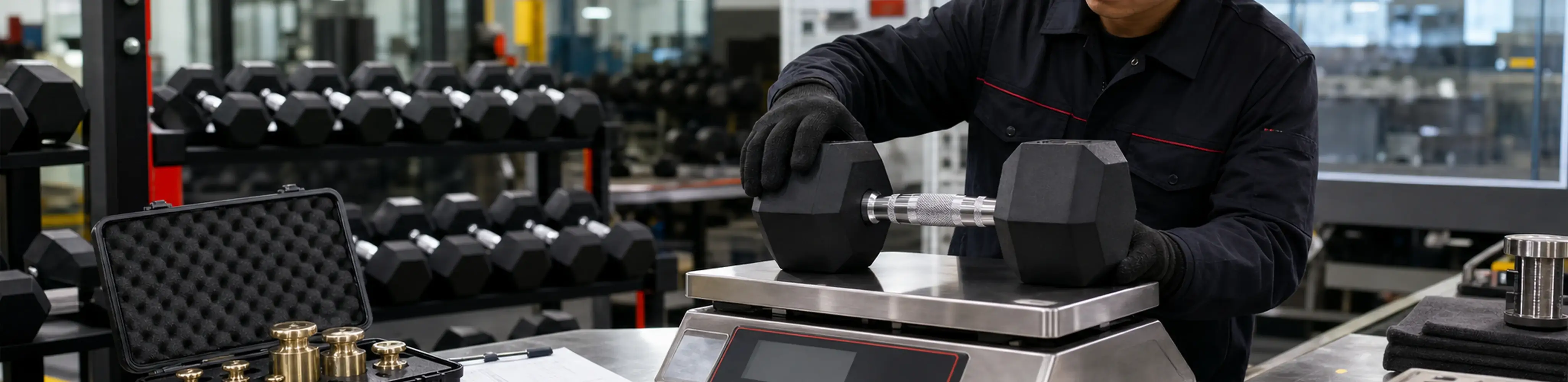
Use a suitable scale and a documented method for weight checks. Verify the scale's status and capacity. Record measured values rather than only writing “pass.” The acceptable deviation must come from the agreed product specification. It can differ by product construction and market; this article does not impose a universal tolerance.
If results trend toward one limit, investigate the batch even when individual samples technically pass. A pattern can reveal process drift. Separate product weight from carton gross weight and do not infer one from the other.
Check Dimensions and Assembly
Measure characteristics that affect use, compatibility, packing, or branding. For dumbbells, these can include overall length, head dimensions, handle diameter, grip length, and logo position. For plates, review diameter, thickness, center-hole or insert fit, and grip openings. Use agreed measurement points and tools.
Inspect head-to-handle connections, inserts, hubs, fasteners, welds, and assembled rack interfaces as applicable. Look for looseness, movement, abnormal gaps, incomplete seating, sharp edges, or parts that do not match the approved sample. Functional checks should reflect intended use without creating an uncontrolled destructive test.
When a characteristic needs torque, drop, hardness, chemical, or load testing, define the method, sample preparation, equipment, and acceptance criteria in advance. A demonstration video is not a substitute for a repeatable test protocol.
Inspect Surface, Color, Odor, and Markings
Review the product under consistent lighting. Look for coating gaps, chips, scratches, bubbles, flash, contamination, rust, stains, inconsistent texture, exposed edges, or visible repair. Compare appearance with the approved sample and written limit rather than expecting handmade visual perfection.
Color should be compared with the controlled reference and within the agreed viewing conditions. Photographs can shift color, so physical standards or measured methods may be needed for strict brand programs. Rubber odor can vary with material and ventilation; if it is a purchasing criterion, agree on evaluation conditions instead of using an undefined “no smell” requirement.
Confirm weight numbers, logo spelling, orientation, size, position, contrast, and durability method. Check multiple weights because artwork scaling or mold inserts may differ. Ensure kilogram and pound marks are not reversed or applied to the wrong item.
Use a Product-Specific Inspection Table
| Area | Dumbbell examples | Plate examples | Evidence |
|---|---|---|---|
| Identity | Model, shape, handle, weight | Model, weight, insert, color | SKU and photographs |
| Measurement | Weight, length, grip diameter | Weight, diameter, thickness, hole | Recorded readings |
| Assembly | Head connection, handle fit | Insert or hub fit | Movement and visual check |
| Surface | Coating, texture, edges | Coating, rubber, markings | Defined defect photos |
| Branding | Logo, weight mark, position | Logo, color code, unit | Artwork comparison |
| Packing | Pairing, protection, carton | Separators, edge protection, carton | Open-carton check |
| Quantity | Pieces and pairs per weight | Pieces per nominal weight | Reconciliation sheet |
Add model-specific checks rather than expanding the table with unrelated generic tests. Each result should point to the sample ID and supporting image or measurement.
Inspect Packaging and Shipping Marks
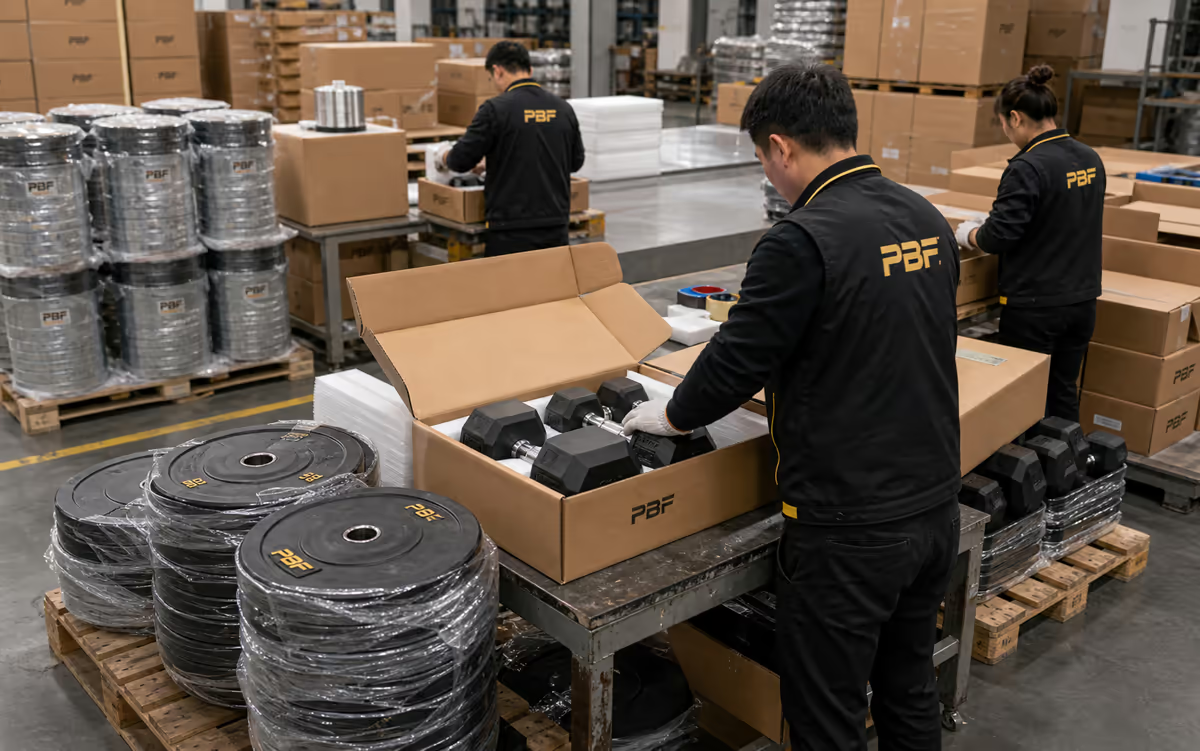
Open cartons from different pallet positions. Confirm product protection, separators, bags, desiccants if specified, carton strength, tape or straps, and absence of product movement. Check that dense items cannot strike one another or damage lighter equipment in transit.
Verify net and gross weight markings where required, carton dimensions, SKU, nominal weight, quantity, barcode, country or language labels, handling symbols, purchase order, and destination marks. Scan barcodes with the intended format when barcode performance is part of acceptance.
Review pallet dimensions, stacking, corner protection, straps, stretch wrap, and weight distribution. The loading plan should keep heavy cartons stable and protect racks, benches, upholstery, or finished surfaces shipped in the same container.
Manage Nonconformities and Reinspection
Every finding needs a clear description, sample ID, photograph, quantity, defect class, and reference requirement. Avoid vague statements such as “quality not good.” Explain what differs, where, and how it was measured.
The buyer and factory should agree on containment, sorting, rework, replacement, concession, or other disposition. Approval of a deviation should be documented and limited to the identified order unless explicitly adopted as a new specification. Do not silently turn one accepted exception into the standard for later batches.
When rework is substantial, schedule reinspection with a defined scope. Photographs may confirm a simple label correction, while product weight or assembly issues may require new sampling. Shipment authorization should identify who approved and what evidence was reviewed.
Buyer Checklist
- Freeze approved sample, technical sheet, artwork, packing, and order quantities.
- Define defect classes, sampling, measurements, and acceptance rules.
- Confirm completion and packed quantity before the visit.
- Sample across weights, colors, batches, cartons, and pallet locations.
- Reconcile pieces, pairs, labels, packing list, and purchase order.
- Record weight readings with a suitable verified scale.
- Measure dimensions that affect compatibility or brand placement.
- Inspect connections, inserts, hubs, fasteners, and rack fit.
- Review coating, color, markings, logo, and defined cosmetic limits.
- Open cartons and check protection, labels, barcodes, and marks.
- Document every defect and the affected sample or quantity.
- Verify corrective action before shipment when required.
Factory Quality-Control Perspective
Factory quality control begins before the PSI. Incoming material, process settings, first-piece checks, assembly, finish, weight verification, and packing controls reduce the chance that final inspection discovers a systemic issue. The PSI then confirms the completed order against the buyer file.
PowerBaseFit can align order-specific checkpoints for dumbbells and plates, including model identification, weight records, visual inspection, branding, quantity, and packaging. The exact tests, frequency, tolerances, and third-party access are confirmed in the commercial and quality documents for the order.
Buyers should share their checklist before production, not on inspection day. Early agreement allows the factory to prepare fixtures, records, samples, and packing evidence and to flag requests that require external laboratory work.
Conclusion
A useful PSI produces a traceable shipment decision. It verifies more than appearance: it connects the physical goods to the approved specification, quantity schedule, branding, and export packing. Its strength comes from preparation, representative sampling, recorded measurements, and disciplined handling of nonconformities.
Send the product list, approved specifications, target market, inspection requirements, and packing needs before placing the order. Discuss a free weight quality plan with PowerBaseFit so model-dependent checks and evidence can be agreed before production begins.
Frequently Asked Questions
Is a pre-shipment inspection the same as factory quality control?
No. Factory QC operates across material, production, assembly, finish, and packing. PSI is a final planned conformity check on the completed order. Both are needed for an effective quality system.
What weight tolerance should dumbbells have?
There is no value that applies to every construction and contract. The buyer and manufacturer should agree the tolerance, measurement method, scale, sample plan, and treatment of out-of-limit results for the specific model.
Should every piece be inspected?
The scope depends on risk and contract. Some attributes may be checked across all pieces during production, while PSI uses representative sampling. Critical concerns and known defects require separate containment and cannot be excused by a sampling result.
Can inspection photographs replace measurements?
No. Photographs support identity, finish, markings, and packing evidence, but they do not prove weight, dimensions, insert fit, or test performance. Record numerical readings where the specification is measurable.
What happens if the PSI fails?
Document the findings and agree containment and corrective action. Depending on severity, the order may be sorted, reworked, replaced, accepted by written concession, or reinspected. Shipment approval should follow the agreed contract and evidence.