Introduction
Planning a commercial dumbbell set is a capacity decision, not simply a choice between two catalog packages. A gym needs enough useful weights at peak times, an increment pattern that supports its training population, and storage that fits the actual dumbbell model. A distributor needs a range that sells coherently and can be replenished. An importer must also consider total shipment weight, packaging, and the cost of carrying slow-moving sizes.
The familiar instruction to buy “one pair from light to heavy” is only a starting point. It does not answer which light weights should begin the range, where increments should change, which popular weights deserve duplicate pairs, or whether the heaviest pairs will be used often enough to justify space and capital. This guide provides a practical planning method without pretending there is one universal set for every facility.
Quick Answer
Start with the gym type, target users, expected peak occupancy, training methods, and available rack length. Define the lowest and highest useful weight, choose consistent increments, and estimate simultaneous demand by weight band. Add duplicate pairs where queues are likely. Then validate the exact list against dumbbell dimensions, rack capacity, floor loading, shipment weight, budget, and future replacement needs.
For a new project, prepare three lists: essential opening set, demand-based duplicates, and optional expansion weights. Ask the supplier to quote each list separately. This makes it possible to protect the core user experience when budget or container space changes.
Definition: What Is a Commercial Dumbbell Set?
A commercial dumbbell set is a planned collection of fixed or adjustable dumbbells intended for repeated use by multiple users. The set is defined by model, measurement unit, weight range, increment pattern, number of pairs at each weight, marking, and storage. It may also include replacement policy and private-label specifications.
The word “set” can be misleading in purchasing. One supplier may mean a single pair at every weight, while another may mean a packaged selection with omitted sizes. Buyers should replace the label with an itemized schedule. The purchase order should state individual weights and quantities, not only “one full set.”
Segment Users Before Choosing Weights
List the groups expected to use the free weight area: beginners, general fitness members, older adults, group-training participants, strength athletes, personal-training clients, hotel guests, or rehabilitation users under professional supervision. The facility's responsibility is to translate its program and risk controls into equipment demand. A supplier cannot infer this from the building size alone.
Light weights often serve warm-ups, accessory movements, shoulder work, classes, and users entering resistance training. Middle weights may see the widest general demand. Heavy pairs serve fewer people but can be important to the gym's positioning. The balance changes by facility. A strength-focused club and a corporate fitness room should not purchase identical ranges merely because both are “commercial gyms.”
Use membership projections cautiously. Peak simultaneous use matters more than total membership. Observe comparable facilities or, when replacing an existing set, record which weights are unavailable most often during busy periods.
Choose the Dumbbell Model Before Finalizing the Rack
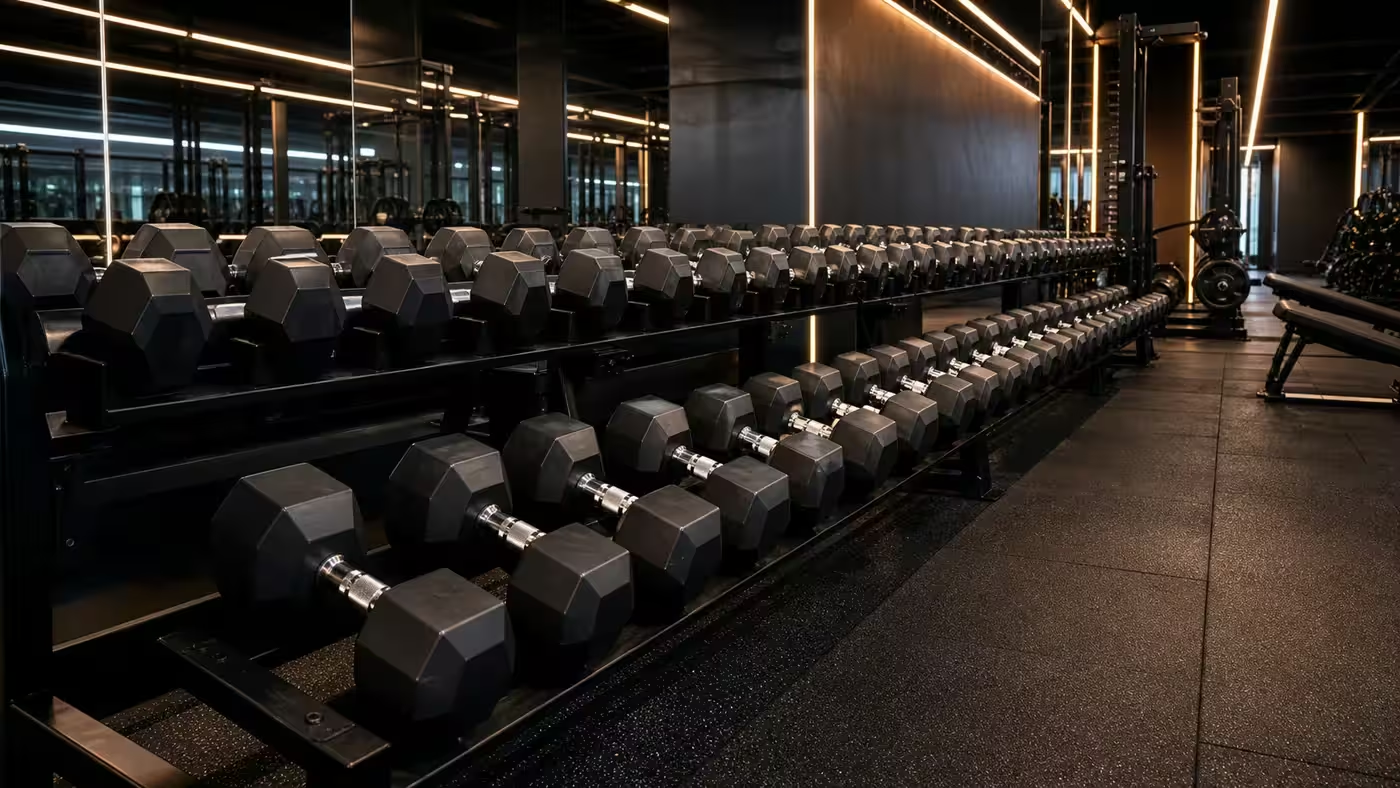
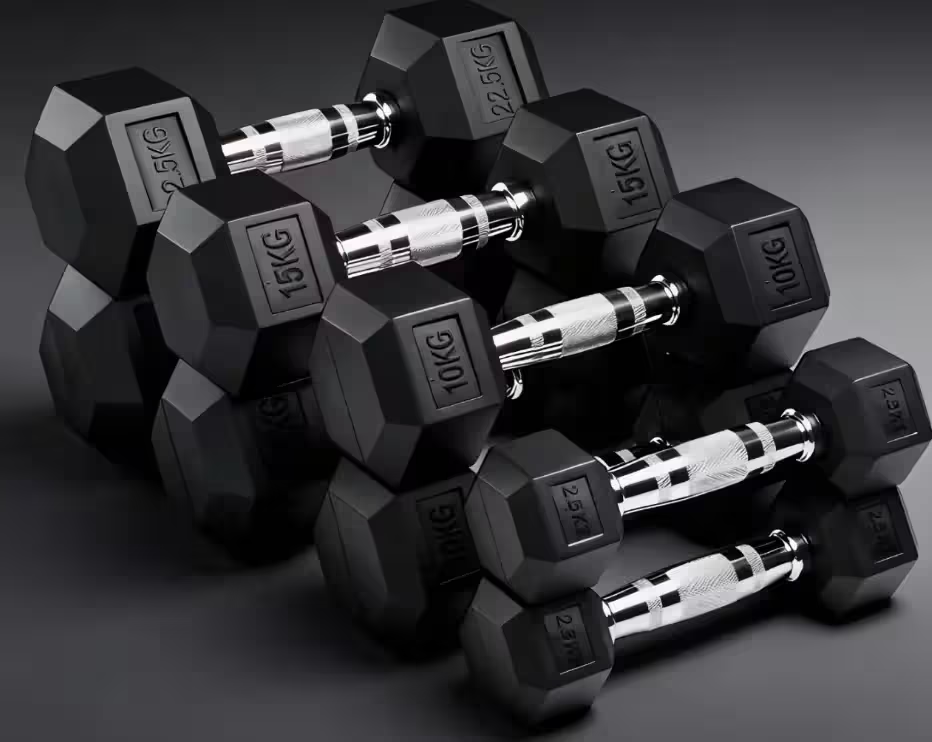
Round rubber, round urethane, hex rubber, chrome, steel, and adjustable systems occupy different space and support different training behaviors. Head diameter, overall length, handle profile, and weight progression affect storage. A rack advertised for a certain number of pairs may not fit every model or the largest weights in the same way.
Select a model based on use, maintenance, floor strategy, brand position, and replacement plan. Hex dumbbells reduce rolling and are useful for exercises near the floor. Round heads work naturally with saddle racks and can support a premium continuous range. Urethane and rubber offer different finish, odor, color, tooling, and price considerations. Chrome may suit controlled environments but requires appropriate care.
Review commercial dumbbell options, then ask for product dimensions by weight. Do not approve the rack from a separate catalog image without a capacity drawing or confirmed loading list.
Define the Lowest and Highest Useful Weight
The lowest weight should support the lightest programmed resistance rather than serve as a decorative endpoint. If classes or rehabilitation-oriented activities require very small increments, that demand may be better served by a dedicated studio set instead of occupying the primary heavy-duty rack. Separating zones can improve storage and availability.
The highest weight should reflect real programming and supervision. Very heavy pairs consume space, increase handling risk, and add significant freight weight. They may be essential in a strength facility and unnecessary in a hotel gym. Ask who will use them, how often, where they will be stored, and whether the floor and rack strategy supports safe handling.
For a new gym with uncertain demand, preserve expansion space. It is easier to add planned upper weights later if the rack and model remain available than to replace a crowded storage system.
Select Increment Patterns
Consistent increments help users progress and help staff return equipment to the right place. The most suitable pattern depends on the unit system and weight band. Smaller changes are usually more useful at the lighter end, where a fixed increase represents a larger percentage of the load. Larger changes may be acceptable at higher weights, but abrupt gaps can frustrate users.
Avoid mixing patterns without a reason. A range that alternates several different increments may be difficult to understand and replenish. If the supplier's standard molds or models do not cover the intended sequence, identify the gap before ordering. Do not assume that every cosmetic design is available at every nominal weight.
When serving markets that use both kilograms and pounds, decide whether to carry one system, dual markings, or separate ranges. The decision affects labels, user comprehension, SKU count, and private-label artwork.
Estimate Duplicate Pairs by Demand Band
Duplicate pairs are often more valuable than extending the range into rarely used extremes. Start by grouping the schedule into light, middle, and heavy bands. Estimate how many users might simultaneously need each band during peak periods. Then choose exact duplicate weights based on the training program and observed behavior.
Do not duplicate every weight automatically. That doubles storage and investment without proving demand. Equally, do not assume one pair is enough throughout the middle range. Queues for common weights reduce member experience and can encourage users to carry dumbbells between zones.
For an existing facility, perform a simple usage audit over several peak periods. Record missing pairs, wait times, and weights left outside the rack. For a new facility, create a review date after opening and retain space and purchasing options for a second phase.
Use a Three-Level Planning Table
| Planning level | Purpose | Typical decision |
|---|---|---|
| Essential opening range | Supports the facility's promised programs | Lowest to highest justified weight with coherent increments |
| Demand duplicates | Reduces waiting at peak time | Additional pairs in proven high-use bands |
| Expansion options | Protects future growth | Heavier end, extra class sets, or second rack |
Quote the three levels separately. This gives the buyer a clear response if the budget changes and prevents random deletion of weights. It also lets an importer compare the marginal shipment weight and packaging of the expansion option.
The final schedule should include SKU or model, nominal weight, unit, quantity in pieces and pairs, marking, carton quantity, net weight, gross weight, and rack position. For private-label programs, add logo method and color reference.
Validate Rack Layout and Floor Operations
Place the proposed racks on the floor plan with circulation, mirrors, benches, cleaning access, and safe lifting space. A long continuous rack can be easy to navigate but may create congestion if benches block the return path. Multiple racks can distribute demand but require clear weight ordering and supervision.
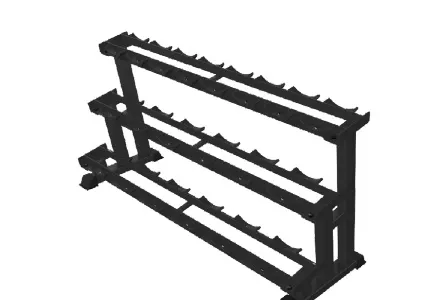
Confirm whether racks are single-tier, two-tier, three-tier, vertical, or saddle-style. Review loading direction and the effort required to remove heavy pairs. The heaviest dumbbells should not be stored in a position that creates awkward handling. Local safety, accessibility, structural, and facility requirements must be reviewed by qualified professionals for the project.
Ask the supplier for the loaded rack footprint and total product weight. The equipment manufacturer can provide product information, but the building professional or responsible local party must confirm floor and layout suitability.
Plan Budget, Freight, and Phased Purchasing
Dumbbells are dense, and adding one pair at many heavy weights changes shipment mass quickly. Compare the product list by total kilograms, not only number of pairs. Request packing dimensions and loading estimates, especially when the set ships with racks, benches, plates, or other equipment.
If the project is phased, protect model continuity. Record head shape, material, handle, logo, marking, color, and approved sample. Ask how repeat orders will be matched and whether tooling or molds are required. A future pair that differs visibly from the opening range may be commercially acceptable to some gyms and undesirable to a branded chain.
Budget should include racks, packaging, inspection, freight, destination charges, installation needs, and a replacement allowance. Current logistics and import charges must be confirmed for the actual destination.
Buyer Checklist
- Define gym type, training programs, target users, and peak occupancy.
- Choose kilograms, pounds, or a controlled dual-marking system.
- Select the dumbbell model before approving rack capacity.
- Establish lowest weight, highest weight, and increment pattern.
- Itemize every weight and quantity in pieces and pairs.
- Add duplicates only where demand can be justified.
- Preserve rack and floor space for planned expansion.
- Confirm dimensions, loaded footprint, and handling of heavy pairs.
- Request net weight, gross weight, cartons, and shipment estimate.
- Record material, logo, color, marking, and sample for reorders.
- Separate essential, duplicate, and optional ranges in the quote.
- Schedule a post-opening usage review and replenishment decision.
Factory and Quality-Control Perspective
From a manufacturing perspective, a clear weight schedule supports material planning, marking control, inspection, packing, and carton identification. The factory should confirm which weights exist in the selected construction and whether the dimensions change across the range. For molded logos or custom colors, quantity by weight can influence tooling and production planning.
Quality control should verify nominal weight according to the agreed method, visual finish, handle or head assembly, marking, logo placement, and quantity. Packaging must identify weights clearly so a buyer can reconcile cartons at receipt. The acceptable tolerance and sampling plan should be agreed for the chosen model rather than assumed from another product.
PowerBaseFit can review a proposed range and point out model, rack, customization, or packing constraints. Final demand planning remains the buyer's decision because the buyer understands the local members, channel, and budget.
Conclusion
A useful commercial dumbbell set is built from demand, not symmetry. The best schedule may include small increments at the light end, duplicates in the busiest middle band, and a carefully justified heavy end. It should fit the selected rack and leave a path for replenishment.
Prepare an itemized list with use case, model, weights, quantities, markings, branding, rack, destination, and phased options. PowerBaseFit supplies commercial free weight equipment and supports OEM and private-label evaluation by model. Send your dumbbell schedule for a factory quotation and request confirmation of dimensions, packing, and model-dependent specifications.
Frequently Asked Questions
How many pairs of dumbbells does a commercial gym need?
There is no universal number. It depends on peak simultaneous use, programs, user profile, available storage, and budget. Itemize one essential range first, then add duplicate pairs in weights with credible peak demand.
Which dumbbell weights should be duplicated?
Use facility-specific evidence. In an existing gym, observe unavailable weights during peak periods. In a new gym, estimate demand by user group and plan an early review. Middle weights often deserve attention, but the exact values vary.
Should a gym buy the heaviest available dumbbells?
Only if its training offer and users justify them. Heavy pairs add freight, rack space, floor load, and handling considerations. Preserve an expansion option when demand is uncertain.
Can one rack fit any commercial dumbbell set?
No. Head dimensions, overall length, rack saddle shape, tier spacing, and largest weights affect compatibility. Approve the rack against the exact model and weight schedule.
How should a distributor plan a wholesale dumbbell range?
Combine local demand, target price tiers, measurement system, retail or project channel, carton strategy, and reorder capability. Avoid carrying many decorative variants before establishing a coherent core range and replacement process.