Introduction
A commercial free weight RFQ should make competing offers comparable. Sending only a product photo and asking for the lowest price leaves the manufacturer to guess the material, construction, weight range, branding, packaging, inspection scope, and delivery basis. Two suppliers can then quote products that look similar but differ substantially in weight accuracy, handle assembly, coating, carton protection, or included services. The apparent price comparison is not a valid purchasing comparison.
For an importer, distributor, gym owner, or fitness brand, the better approach is to issue one controlled request for quotation. The document does not need to be complicated. It needs to state what is fixed, what the factory may recommend, and what must be confirmed before an order. This guide explains the information PowerBaseFit needs to evaluate a commercial dumbbell or weight-plate project and the questions buyers should use when comparing any manufacturer.
Quick Answer
A complete commercial free weight RFQ should include the product type, material and construction, weight units, weight range, increments, quantity for every weight, color and surface finish, logo method, packaging, quality checks, destination, requested trade term, and target schedule. Attach reference images or drawings, but do not let an image replace written specifications. Ask every supplier to identify assumptions, exclusions, sample costs, tooling, minimum order quantities, production timing, and the validity period of the quotation.
The fastest route to a useful quote is a spreadsheet with one row per model or weight. Add a separate page for common requirements such as branding, inspection, cartons, pallets, and shipping marks. If a specification is undecided, label it “factory recommendation required” instead of leaving the field blank.
Definition: What Is a Commercial Free Weight RFQ?
An RFQ, or request for quotation, is a controlled purchasing document used to obtain price and commercial terms for a defined scope. For free weights, that scope may cover fixed dumbbells, adjustable dumbbells, kettlebells, Olympic plates, grip plates, bumper plates, bars, racks, and accessories. A strong RFQ connects a product specification to a quantity and a delivery requirement.
An RFQ is not the same as a general product inquiry. An inquiry can begin a discussion and help a buyer understand available models. An RFQ comes after the buyer has narrowed the project enough for the manufacturer to calculate materials, production steps, branding, packaging, and logistics. It should produce an offer that can later be reconciled with the approved sample and purchase order.
Start With Buyer, Market, and Use Case
Tell the supplier who will use or resell the equipment. A high-traffic commercial gym, hotel fitness room, strength studio, sporting-goods distributor, and private-label retail program can require different ranges and finishes. State the target market, sales channel, expected use level, preferred measurement unit, and whether the range must match an existing collection.
This context helps a factory recommend a suitable model without making unsupported assumptions. For example, a distributor may prioritize repeat-order consistency, compact packaging, barcode placement, and replacement availability. A gym project may prioritize common weight duplication, rack compatibility, floor protection, and clear identification. A fitness brand may place greater emphasis on color control, logo durability, retail packaging, and launch timing.
Do not describe a product only as “commercial grade.” The phrase is not a measurable specification. Explain the environment and ask the supplier to state construction, materials, and controlled characteristics that support the proposed application.
Specify Dumbbells by Model and Weight
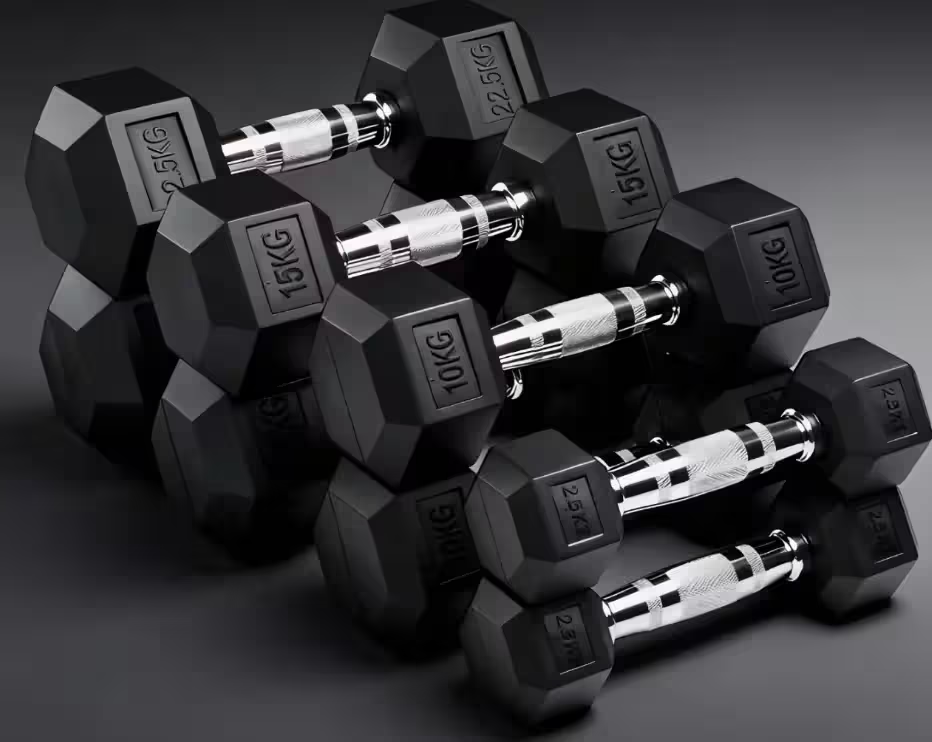
For dumbbells, identify the head shape, head material or core, coating, handle material, handle finish, knurling preference, and head-to-handle construction. If the buyer is considering more than one option, create separate lines rather than combining alternatives in one description. A rubber hex dumbbell and a round urethane dumbbell are different purchasing programs even when the weight range is identical.
List every weight and the number of pairs or pieces required. State whether markings use kilograms, pounds, or both. Define the starting weight, ending weight, and increment pattern. If frequently used weights need duplicate pairs, show those quantities directly. Also confirm whether the quote includes a compatible rack and whether its capacity is based on the exact dumbbell dimensions.
Useful dimensional fields include overall length, head size, handle diameter, grip length, and rack footprint. Not every buyer must dictate each dimension, but the supplier should return the relevant values for the selected model. Review the commercial dumbbell category before issuing the RFQ so model names and construction descriptions remain consistent.
Specify Weight Plates and Bumper Plates
For plates, state the application first: general strength training, plate-loaded machines, Olympic lifting, functional training, competition-style training, or resale. Identify the plate type, material, insert or hub construction, hole diameter, nominal diameter, thickness, surface finish, weight marking, and required weight units. Ask the supplier to confirm actual specifications by model instead of copying generic values from an unrelated plate.
For bumper plates, buyers may also need information about hardness, rebound behavior, insert fit, and drop-test method. These characteristics depend on formulation and construction, so the quotation should describe how they are evaluated rather than promise one universal result. For coated iron or steel plates, review coating coverage, edge protection, grip openings, marking method, and storage requirements.
List quantities by weight and clarify whether numbers refer to pieces, pairs, sets, or total kilograms. This prevents a common ordering error. The weight plate category provides product references, but the final RFQ should record the selected model and agreed specification in writing.
Use a Comparable Specification Table
The quotation sheet should force suppliers to answer the same fields. A practical starting structure is shown below.
| RFQ field | Buyer provides | Supplier confirms |
|---|---|---|
| Product and model | Intended type or reference | Exact offered model and construction |
| Weight range | Weights, increments, unit | Availability and dimensions by weight |
| Quantity | Pieces or pairs for each weight | MOQ and production quantity |
| Material and finish | Required or preferred option | Material, coating, color, tolerances |
| Branding | Logo artwork and target position | Method, tooling, sample, limitations |
| Packaging | Retail or export requirements | Carton, protection, pallet and marks |
| Quality control | Required checks and records | Inspection method and sampling plan |
| Delivery | Destination and requested Incoterm | Quoted term, port, timing and exclusions |
Ask the supplier to return this table with the offer. Blank answers should be resolved before price approval. Where dimensions or tolerances depend on a specific model, use “confirmed on technical sheet” and attach that sheet to the commercial offer.
Define OEM and Private-Label Requirements
Branding affects method, tooling, unit cost, sample timing, and minimum order quantity. Include vector logo files when available, Pantone or other controlled color references, the desired mark size, placement, weight-label format, and packaging artwork requirements. Ask which method is suitable for the product material: molded branding, printed marking, laser marking, badges, decals, or another process.
The RFQ should separate standard customization from new product development. Applying an approved logo to an existing model is different from changing a mold, geometry, handle, or material system. Request individual prices for sample preparation, logo tooling, production tooling, artwork setup, and branded packaging. Confirm who owns any buyer-funded tooling and how it will be stored or maintained.
For a first private-label order, include an approval sequence: digital artwork, pre-production sample, signed specification, production reference, inspection, and packing evidence. PowerBaseFit evaluates branding feasibility by model; it should not be assumed that every logo method works on every surface.
Add Quality Control and Sample Requirements
State which characteristics must be checked and what evidence is expected. Common checkpoints include material or construction confirmation, visual finish, weight, dimensions, handle or insert assembly, marking, logo position, color reference, quantity, carton condition, and shipping marks. The exact test plan should match the product and order risk.
If a sample is required, specify whether it is a standard sample, a custom logo sample, or a complete pre-production reference. Ask about sample price, freight, preparation time, and whether any part of the cost is credited after an order. Record all approved changes. A photograph alone may not show weight, fit, odor, texture, or packing strength, so physical sample review can be valuable for a new model or brand program.
Avoid demanding an undefined “100% inspection” without stating what is checked. Inspection scope, sample size, acceptance rules, records, and corrective action should be agreed. If a third-party inspection is planned, tell the manufacturer before production scheduling and provide the checklist early.
Include Packaging and Logistics in the Quote
Free weights are dense products that can damage finishes, cartons, pallets, and nearby items if packaging is not designed for the actual load. Describe whether the order needs basic export cartons, branded retail boxes, individual protection, separators, reinforced cartons, palletization, moisture protection, barcode labels, or destination-specific shipping marks. Ask for the gross and net weight, carton dimensions, units per carton, pallet plan, and estimated shipment volume.
Provide the country, destination port or city, and requested quotation basis such as EXW or FOB. If another term is required, ask the supplier to define exactly what is included. Freight, insurance, duty, tax, brokerage, examination, storage, and final delivery can change over time and by destination. Buyers should obtain current advice from their freight forwarder or customs professional rather than relying on a factory product price as a landed-cost figure.
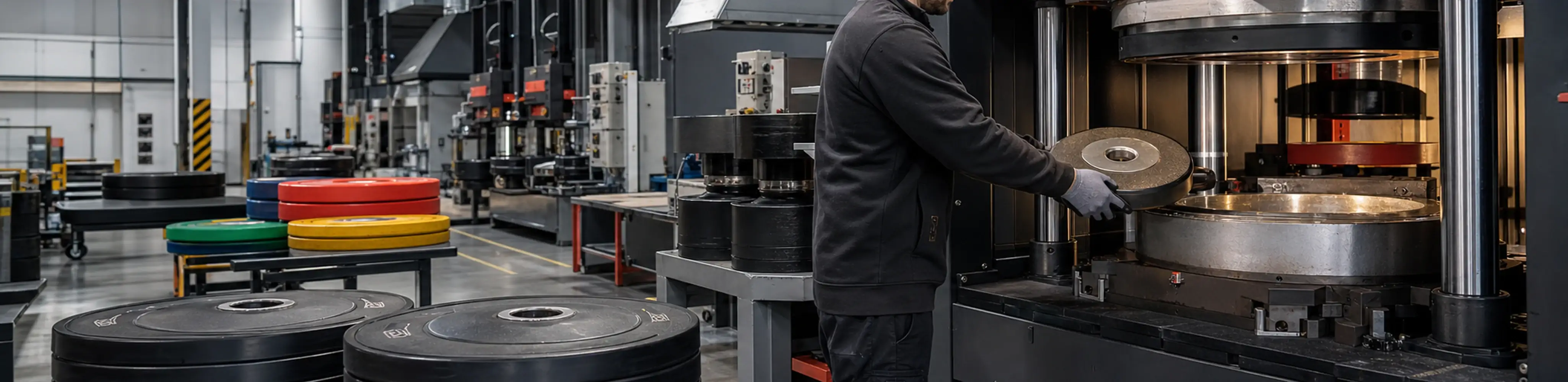
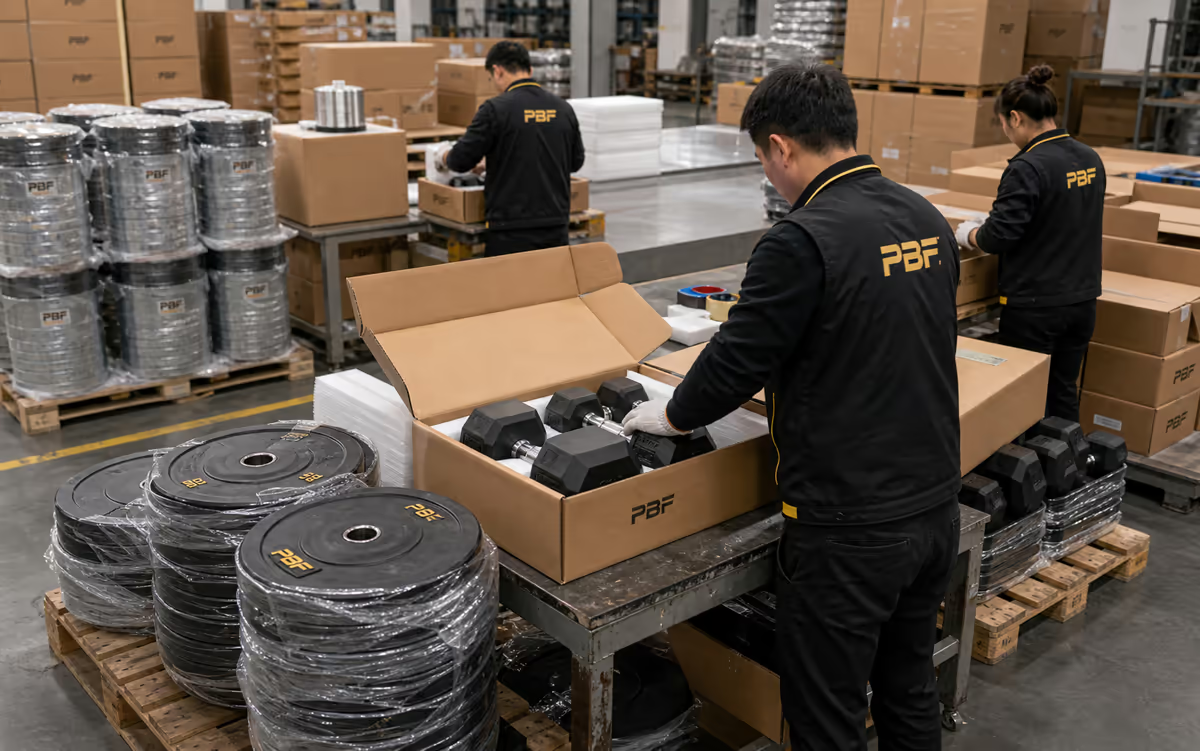
Ask whether racks, benches, accessories, and free weights can be loaded together and how heavy cartons will be separated from vulnerable items. The PowerBaseFit factory page shows the production and export context buyers can discuss during quotation review.
Buyer Checklist Before Sending the RFQ
- Identify the buyer type, sales market, use environment, and measurement unit.
- Create one row for every product model and every weight-specific quantity.
- State whether quantities mean pieces, pairs, sets, cartons, or total weight.
- Define materials, finishes, colors, markings, and undecided fields.
- Attach logo artwork and describe the preferred branding position.
- Request technical sheets, dimensions, and model-dependent tolerances.
- Define sample type, approval steps, inspection scope, and required records.
- Specify carton, retail packing, pallet, barcode, and shipping-mark needs.
- Provide destination and requested trade term without assuming landed costs.
- Ask for MOQ, tooling, lead time, quotation validity, payment terms, and exclusions.
Before selecting a supplier, normalize the returned offers. Add excluded tooling, samples, branded packaging, pallets, and required inspection to the comparison. Flag different materials or constructions instead of averaging them into one price table.
Common RFQ Mistakes and How to Avoid Them
The most frequent mistake is treating a reference photo as a complete specification. Photos are useful for identifying style, but not internal construction, materials, weight tolerance, dimensions, or packaging. Another mistake is requesting a “full set” without listing the weights. Suppliers may interpret a set differently, producing inaccurate prices and rack recommendations.
Buyers also lose comparability when they ask each factory a different sequence of questions. Use one revision-controlled RFQ and distribute the same update to every shortlisted supplier. Record whether an answer is a firm commitment, a model-dependent estimate, or an option. Do not allow chat messages to become the only record of a critical specification.
Finally, avoid choosing on unit price before checking the commercial scope. A lower offer may exclude logo tooling, sample work, reinforced packaging, pallets, inspection support, or inland transport. The purpose of the RFQ is not to create more paperwork; it is to prevent expensive ambiguity later.
Conclusion
A well-prepared commercial free weight RFQ turns a broad sourcing request into a controlled purchase decision. It gives manufacturers enough information to select the right model, calculate customization and packaging, and explain model-dependent details. It also gives the buyer a consistent basis for sample approval, inspection, and final order review.
PowerBaseFit manufactures free weight equipment for B2B buyers and evaluates OEM, ODM, and private-label requirements against the selected product and quantity. To request a quotation, prepare the product list, weight range, quantities, branding files, packaging needs, destination, and target schedule. Send the RFQ to PowerBaseFit for model-specific confirmation rather than relying on generic assumptions.
Frequently Asked Questions
What is the minimum information needed for a dumbbell quotation?
Provide the dumbbell type, weight range, increments, quantity by weight, unit of measure, preferred material or coating, branding requirement, packaging, and destination. If the model is undecided, explain the use case and ask the factory to recommend options with their specifications.
Should an RFQ request a price per kilogram or per piece?
Ask for the commercial unit that matches the product and purchasing method, then request total weight for logistics. Dumbbells are usually managed by piece or pair, while shipment planning also depends on total net and gross weight. Make the unit explicit on every line.
How should a buyer compare two quotations with different materials?
Do not compare only the unit price. Separate the offers by construction, material, finish, branding, packing, inspection, and delivery scope. Ask each supplier to quote the same controlled specification or clearly price alternatives as separate options.
When is a pre-production sample necessary?
A sample is especially useful for a new model, custom logo, controlled color, retail package, or high-risk first order. The need depends on product complexity, order value, and the buyer's quality plan. Agree on what the sample approves and how later changes will be documented.
Can a factory quote landed cost for every country?
It depends on the requested service and current logistics capability. Product suppliers can quote agreed trade terms, but duty, tax, brokerage, local charges, and final delivery vary by destination and time. Confirm the current landed-cost model with a qualified freight forwarder or customs professional.